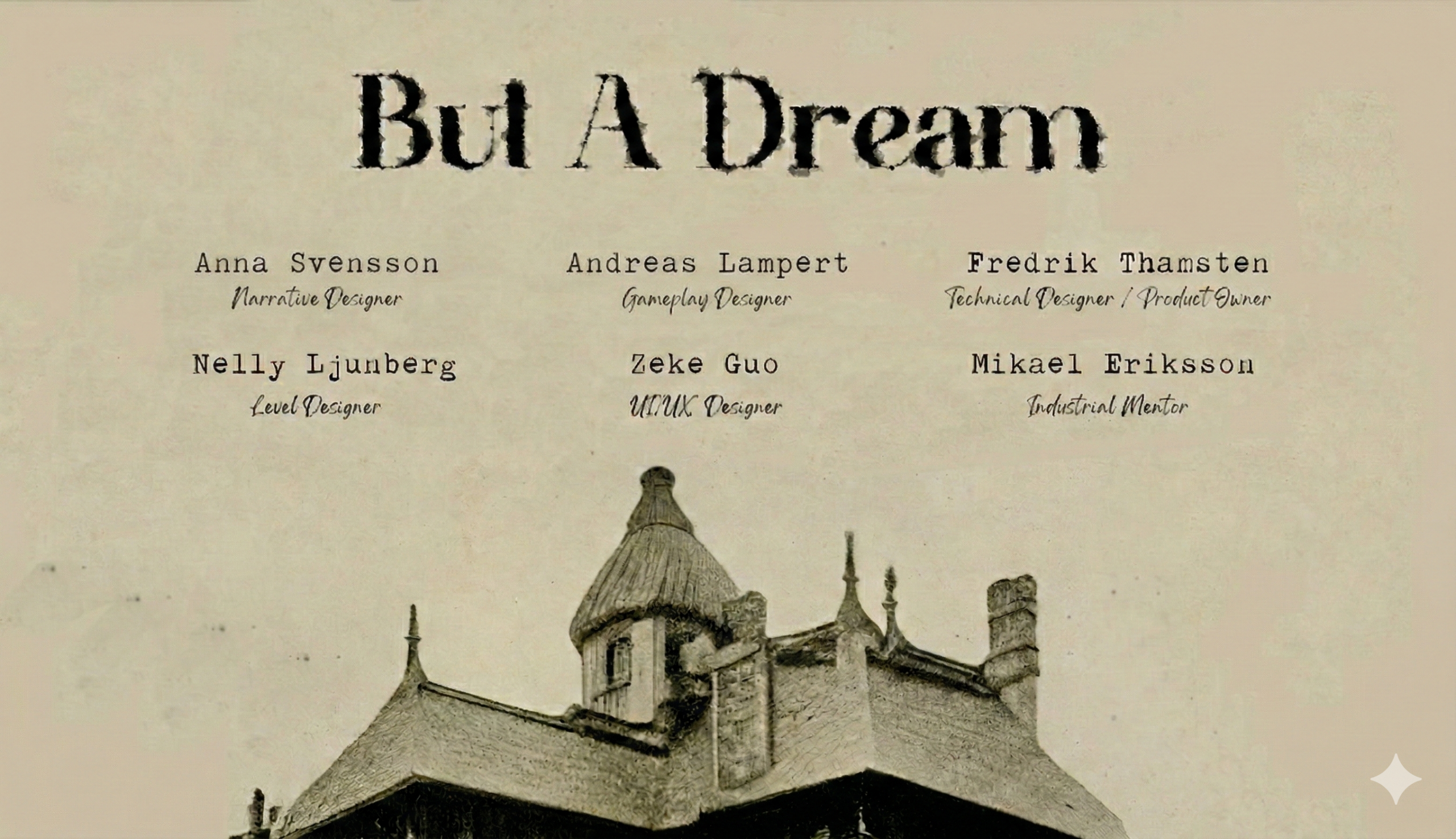
But A Dream
FutureGames Degree Project
Role: Gameplay Design
Development Duration: 10 Weeks
Game Engine: Unreal Engine 4
Team: 5 Designers, 1 Industrie Mentor
Degree Project Framework
This being our degree project, allowing for the longest development time, although without artists or dedicated programmers was an entirely different expierence.
So we got a few complementary designers together to pull this one off.
Specialising in Technical Programming, Level Design, UI Design, Narrative Design.
Last but not least my part as Gameplay Designer.
10 weeks, and allowed to use MegaScans and Marketplace assets.
Impressum
Inspiration
Horror games were an early genre being floated around, besides Rogue-Likes.
Due to limitations in not having tailor-made 2D or 3D art assets to use, that was one advantage of the scary route.
Games like P.T. and Soma, in terms of atmosphere and the narrative being slowly unrolled, were qualities we wanted.
Besides some watch-along gaming, we did our independent research. In this case, my passion for movies/TV shows was a strong asset.
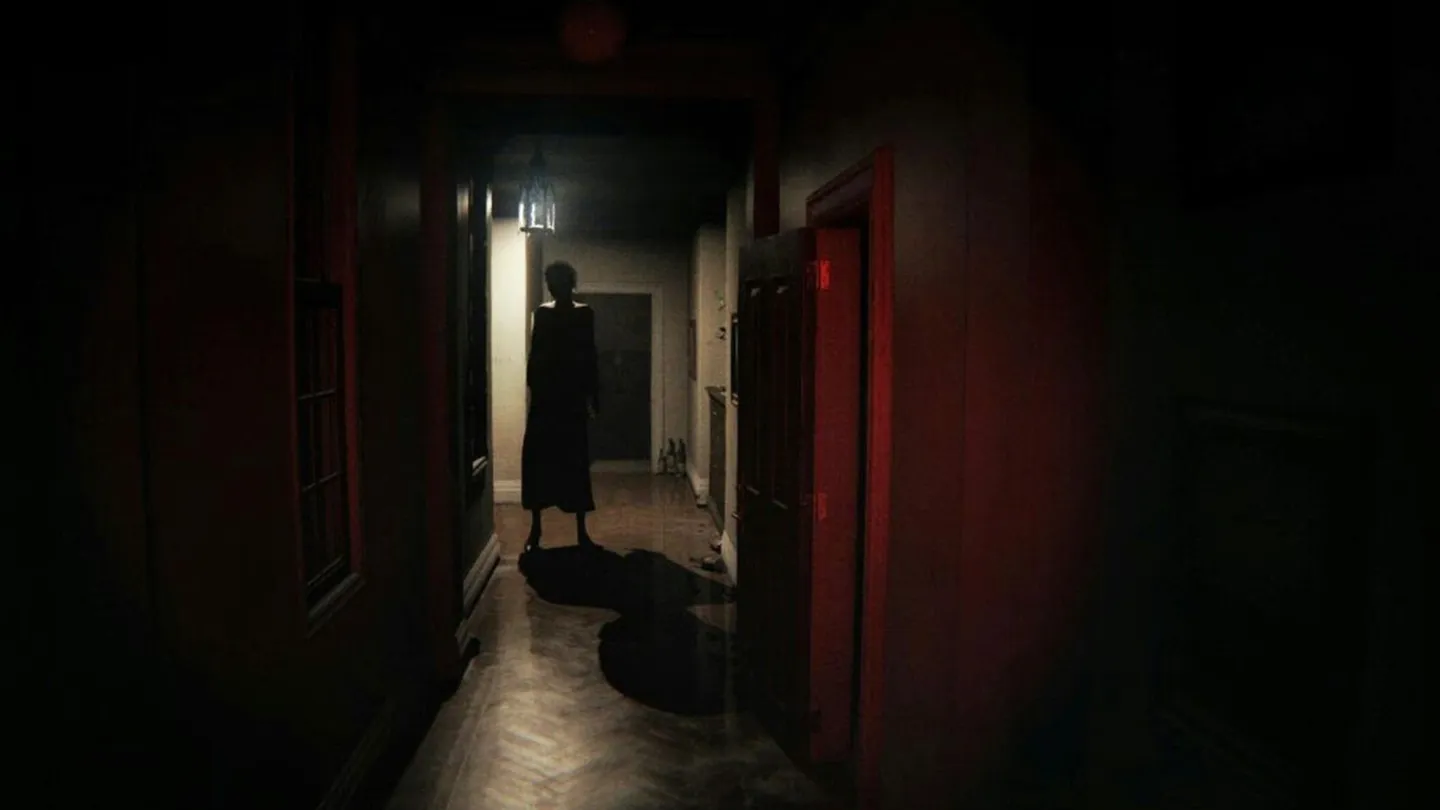
P.T.
But A Dream
Impressum
Safety of day, fear of the night.
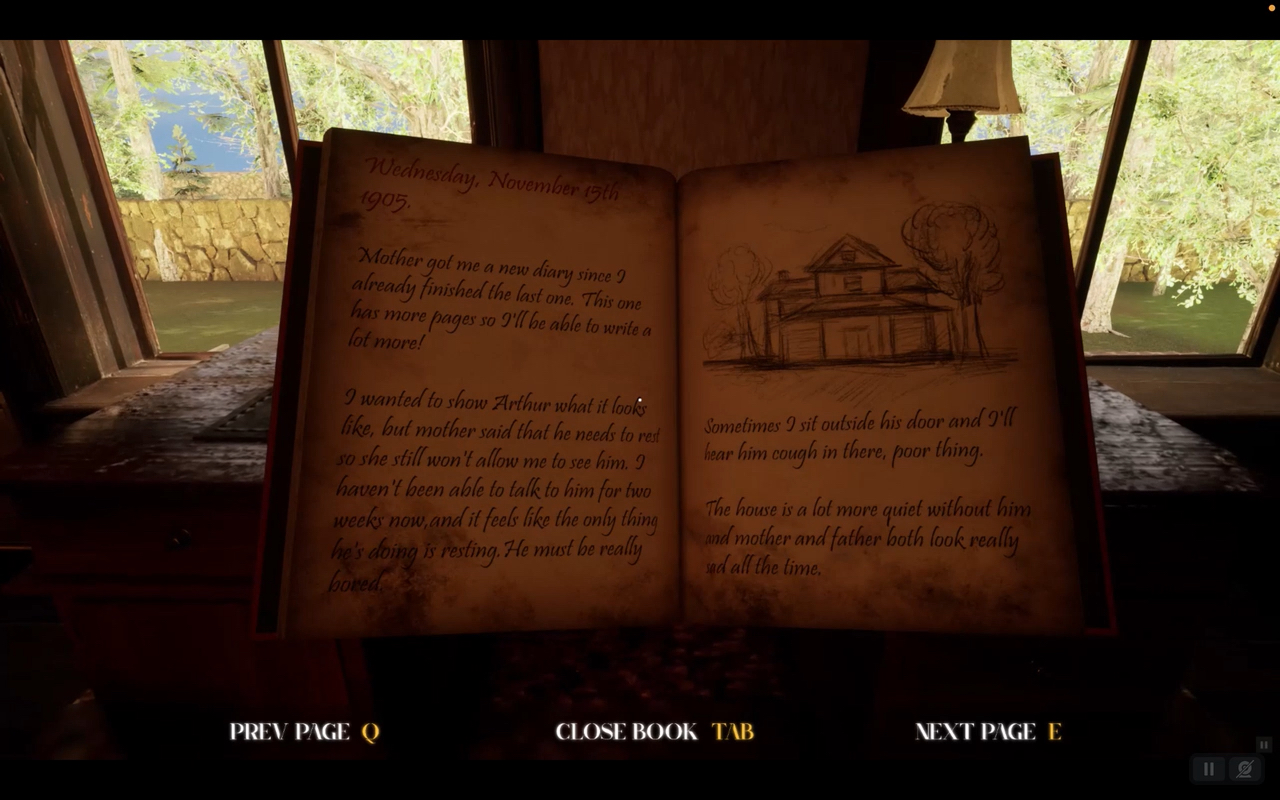
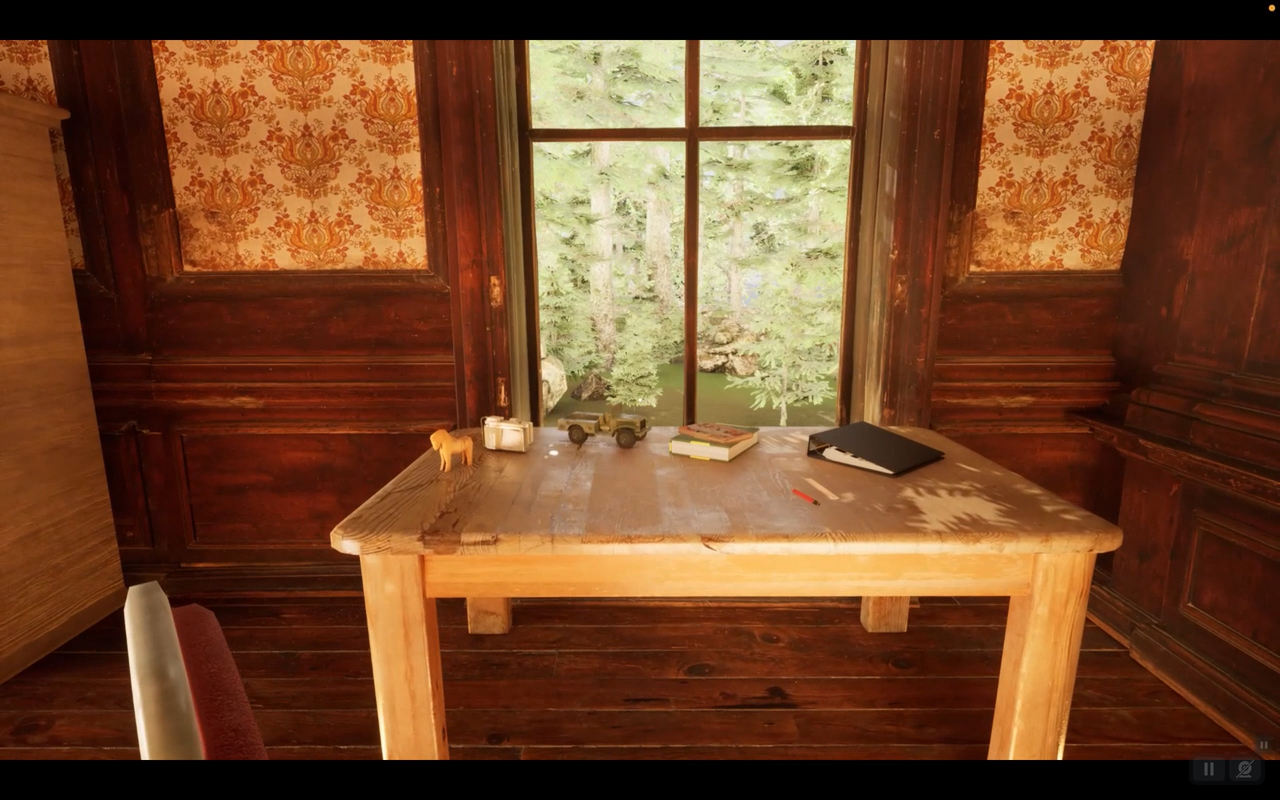
We all probably have had nightmares as a child, know the uneasy feeling of the dark. But for that to really hit home, having the same level as your new home during the day is a major tool. Having the beautifully crafted story, including the diary and all the items that make the house look like something a family has only just moved into, helps to platform the gameplay very effectively.
But A Dream
But A Dream
Impressum
Gameplay Inspiration
P.T. was and is still iconic, so since we couldn’t have a bombastic amount of level variety to feasibly create within our time, having a repeatable place was the solution, whilst not going completely abstract.
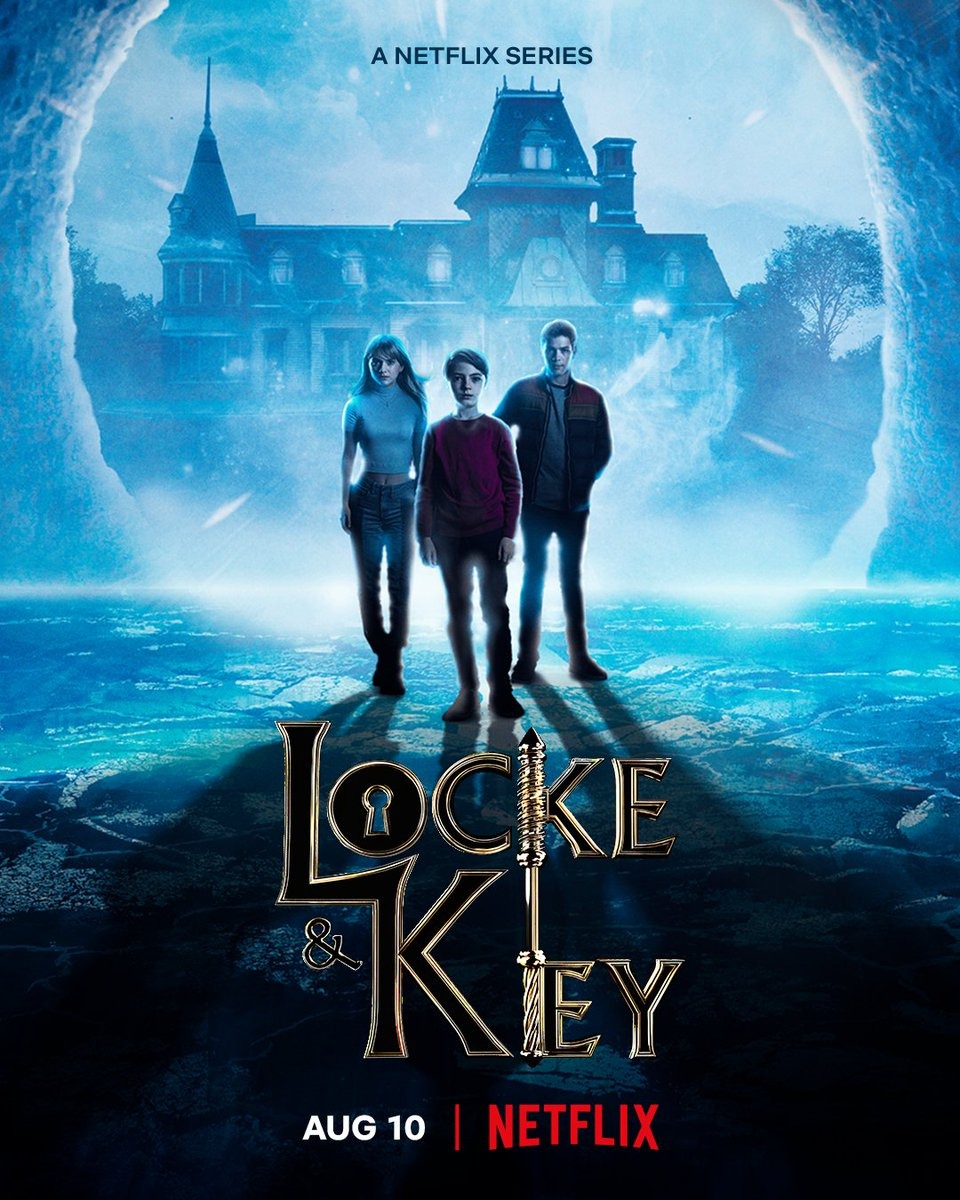
I watched a bunch of horror gameplay and added films/shows to watch and rewatch. One of those shows would be Locke & Key from Netflix. More of a teenager aimed scary, but it had one particularly cool ingredient, shadow monsters!
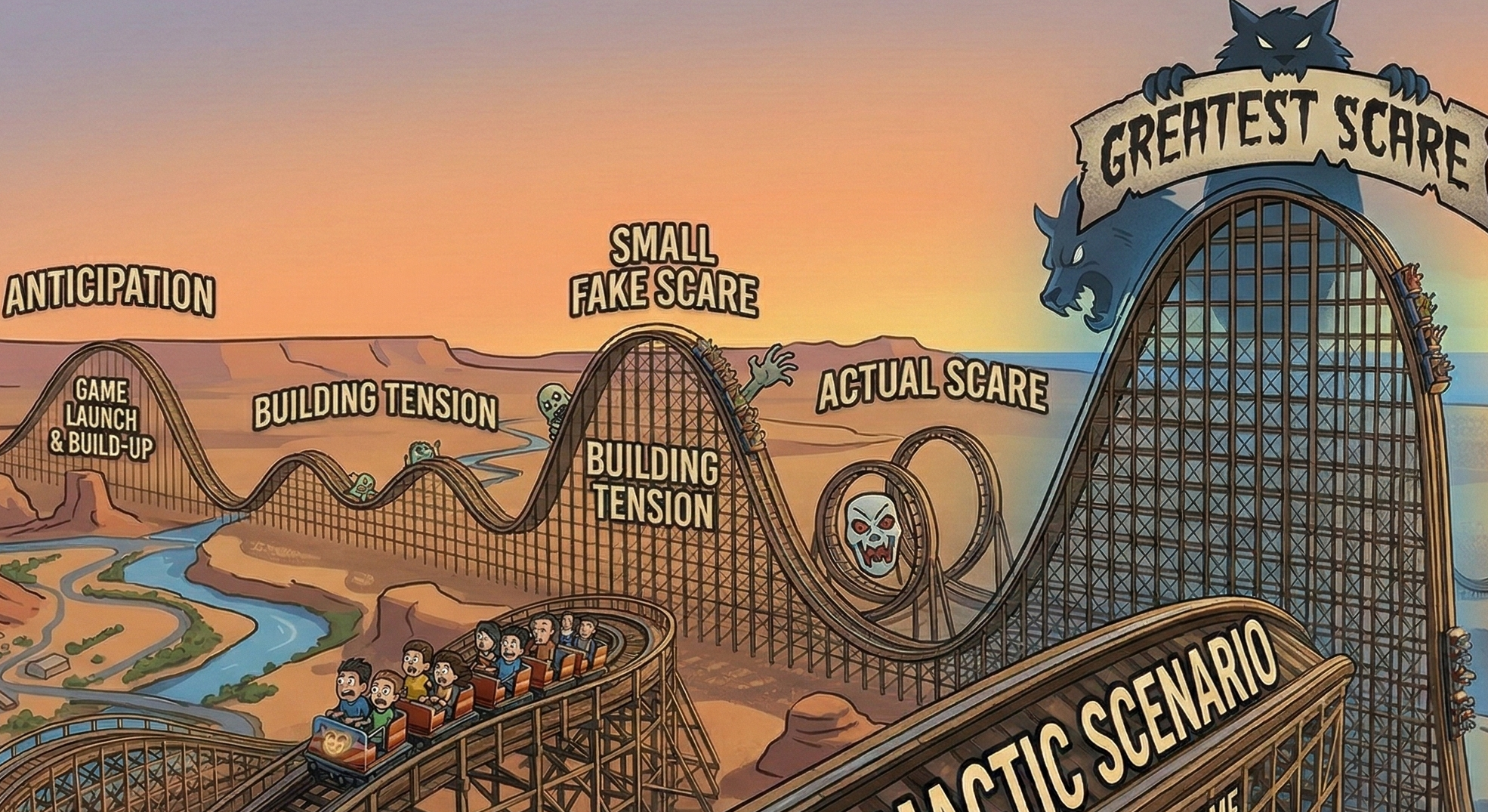
Creating a trailer, which we discussed in the team and with our industry mentor, was a helpful thing, because there are different kinds of scary things and they are perceived quite differently by other people.
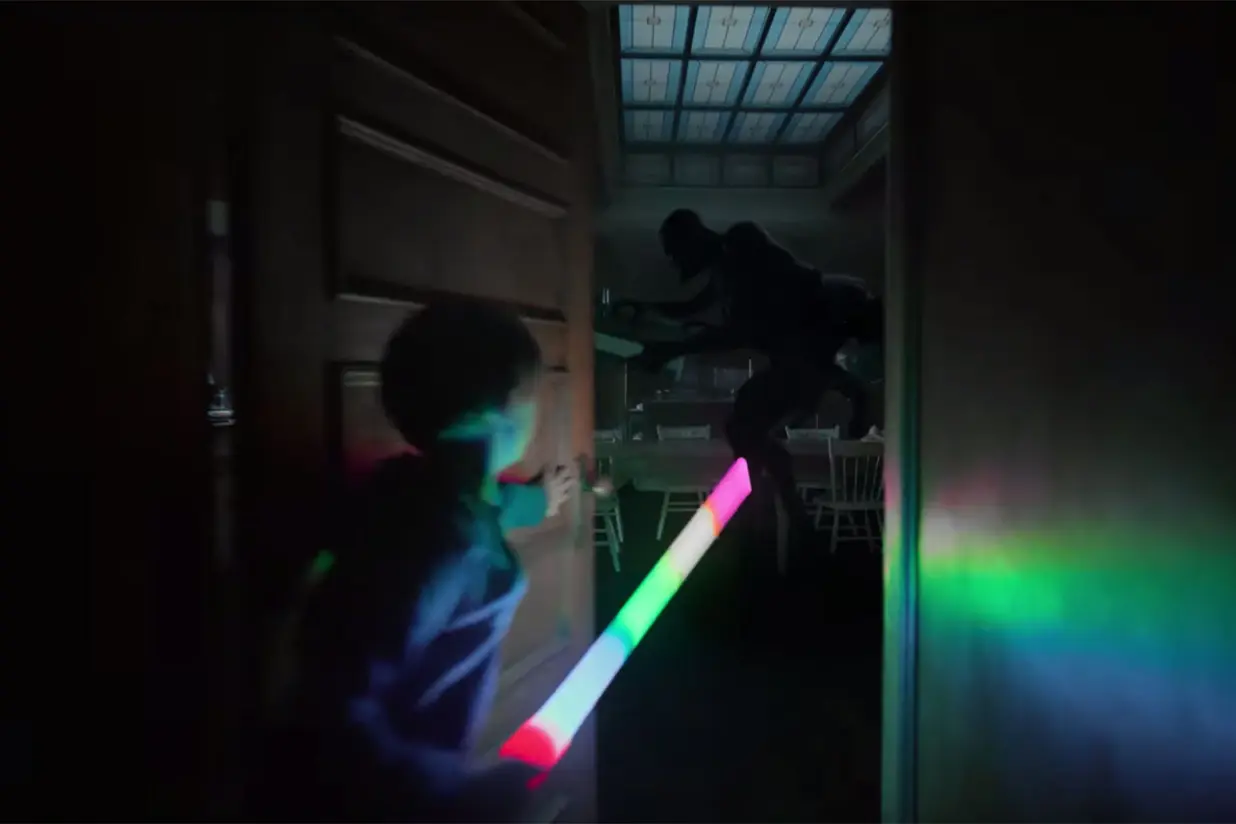
Netflix: Locke & Key
Impressum
The Unknown Fear
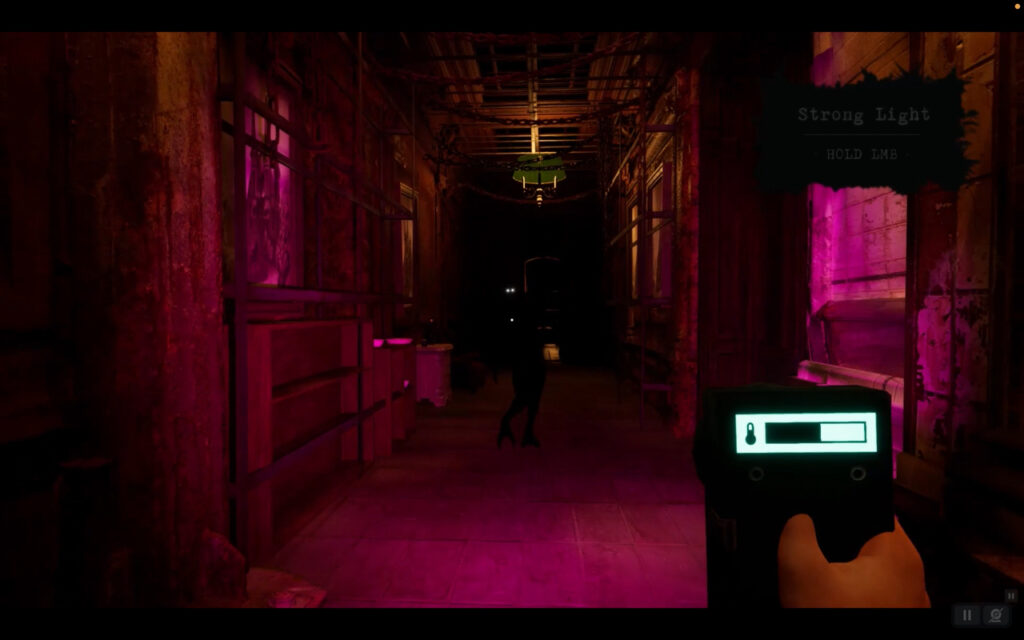
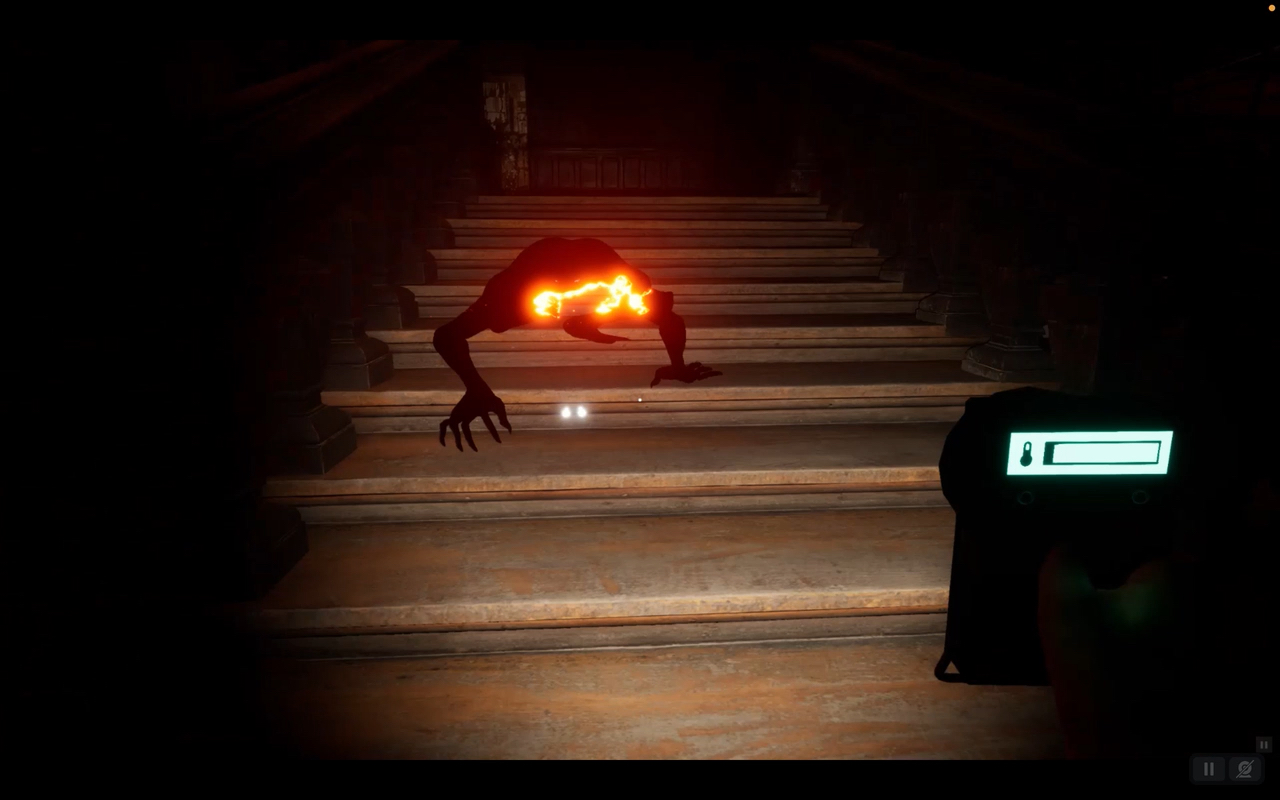
One option would have certainly been a more narrative walking simulator, where all you can do is move and close doors. But giving the player a tool that’s both essential for navigation and as a weapon makes you be on your toes differently. Sure, some people are just too cool to be scared, almost no matter what you do, but those who can be scared now have a motivation and reason to be scared that if they don’t perform x, then y happens.
Being able to pace and let tension build, with environmental scares and audio sounds, makes the experience for some even worse.
But A Dream
But A Dream
Impressum
Creating different scares
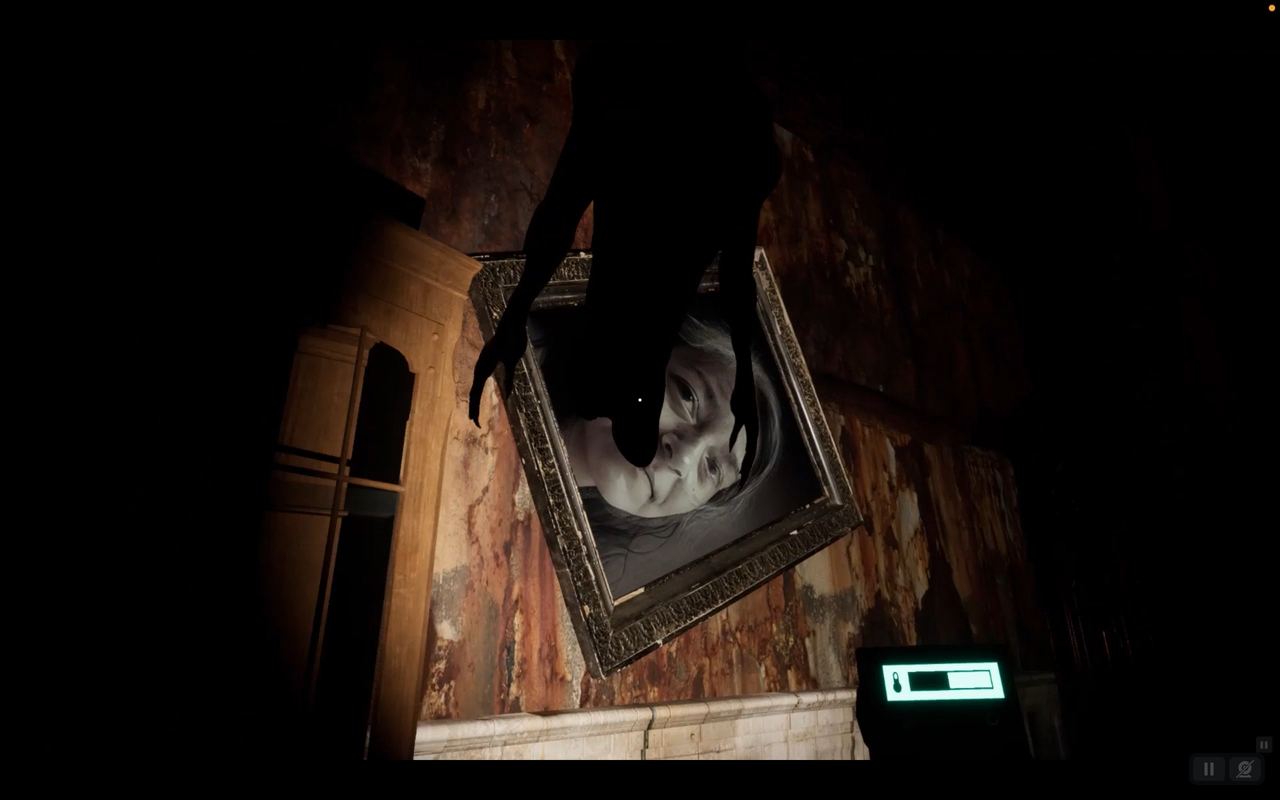
Upon playing, you might hear the coughing of your sickly sibling, or an uneasy familiar sound from Stranger Things. The scares are varied, perhaps depending on luck, too frequent for my liking, but since it is a degree project, the idea was to show off a bit.
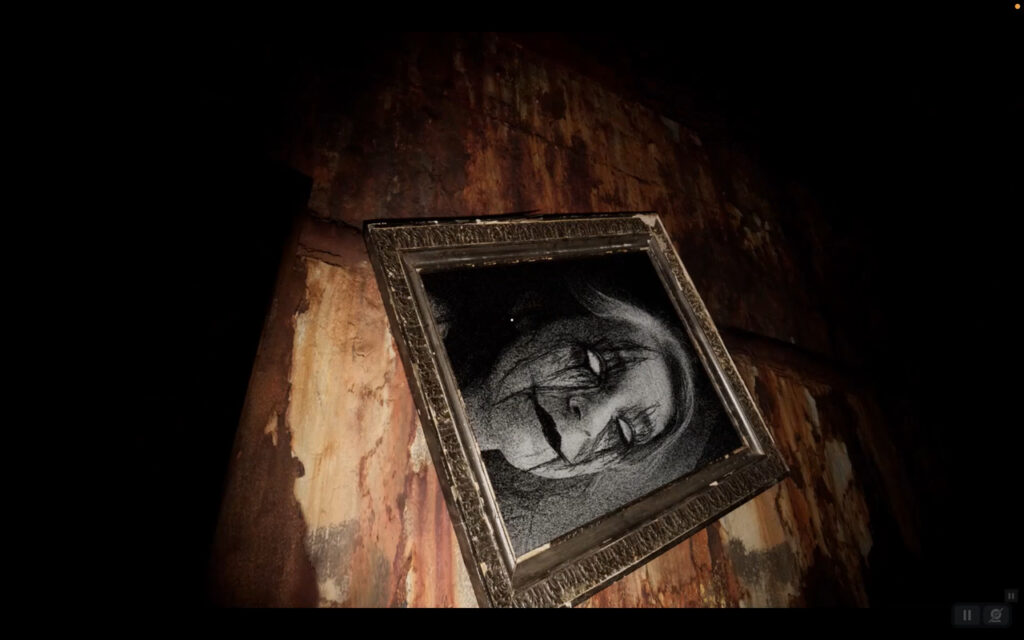
Although AI and Midjourney were still quite new, not having the amount of monsters, I’d have liked the idea of a cliche portrait that changes or the eye follow was something I wanted. And from there, mixing it with giving credits to the whole team of designers and our mentor was a really nice touch, I thought. Our UI designer used his artistic skills to make this fantastic interactive art.
But A Dream
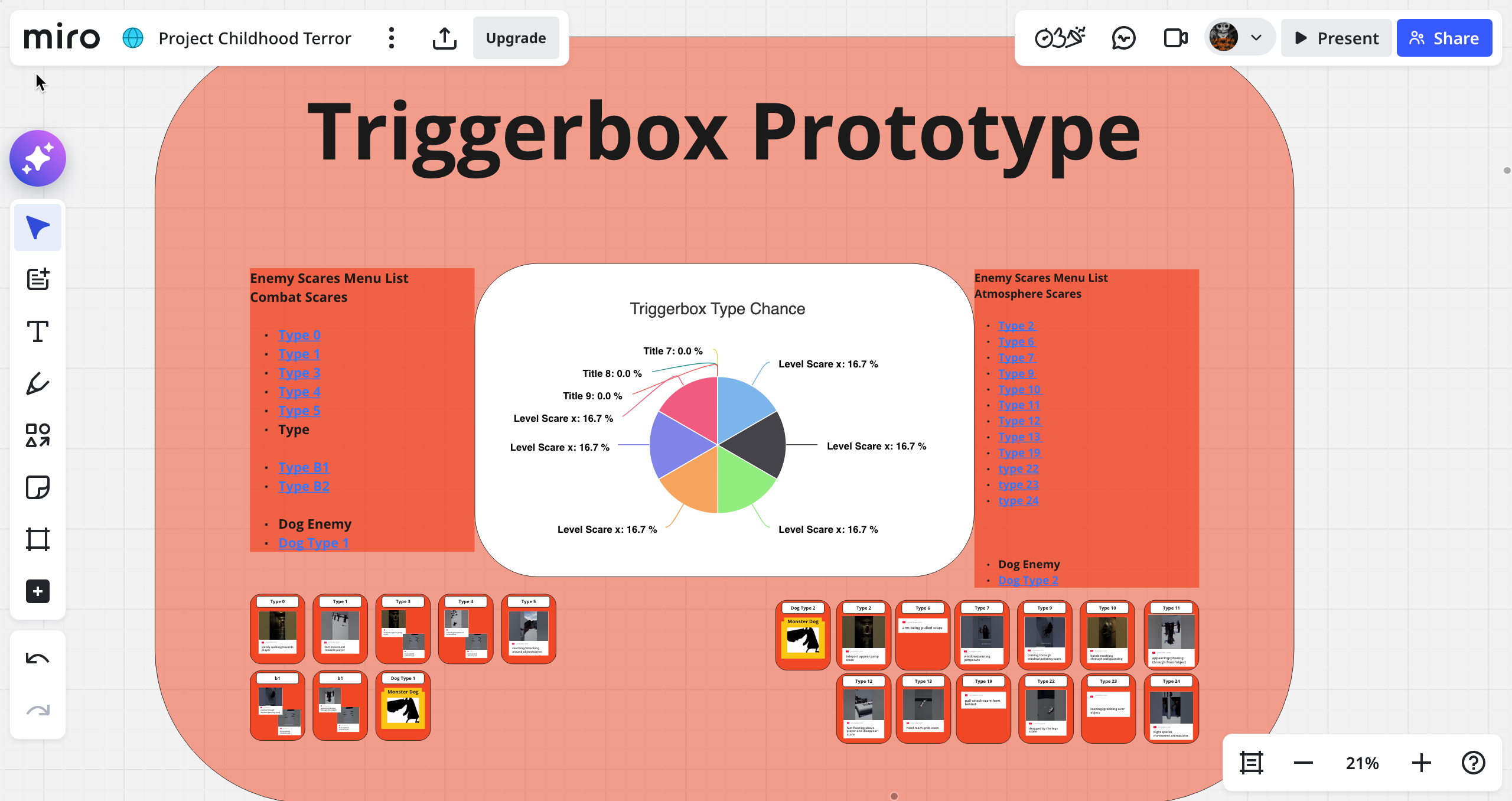
Triggerboxes
Since death is unlikely, but possible, knowing where a scare already was would make that amount of time less scary or not scary at all, bringing an emotion to the player that might pull them out of the experience entirely.
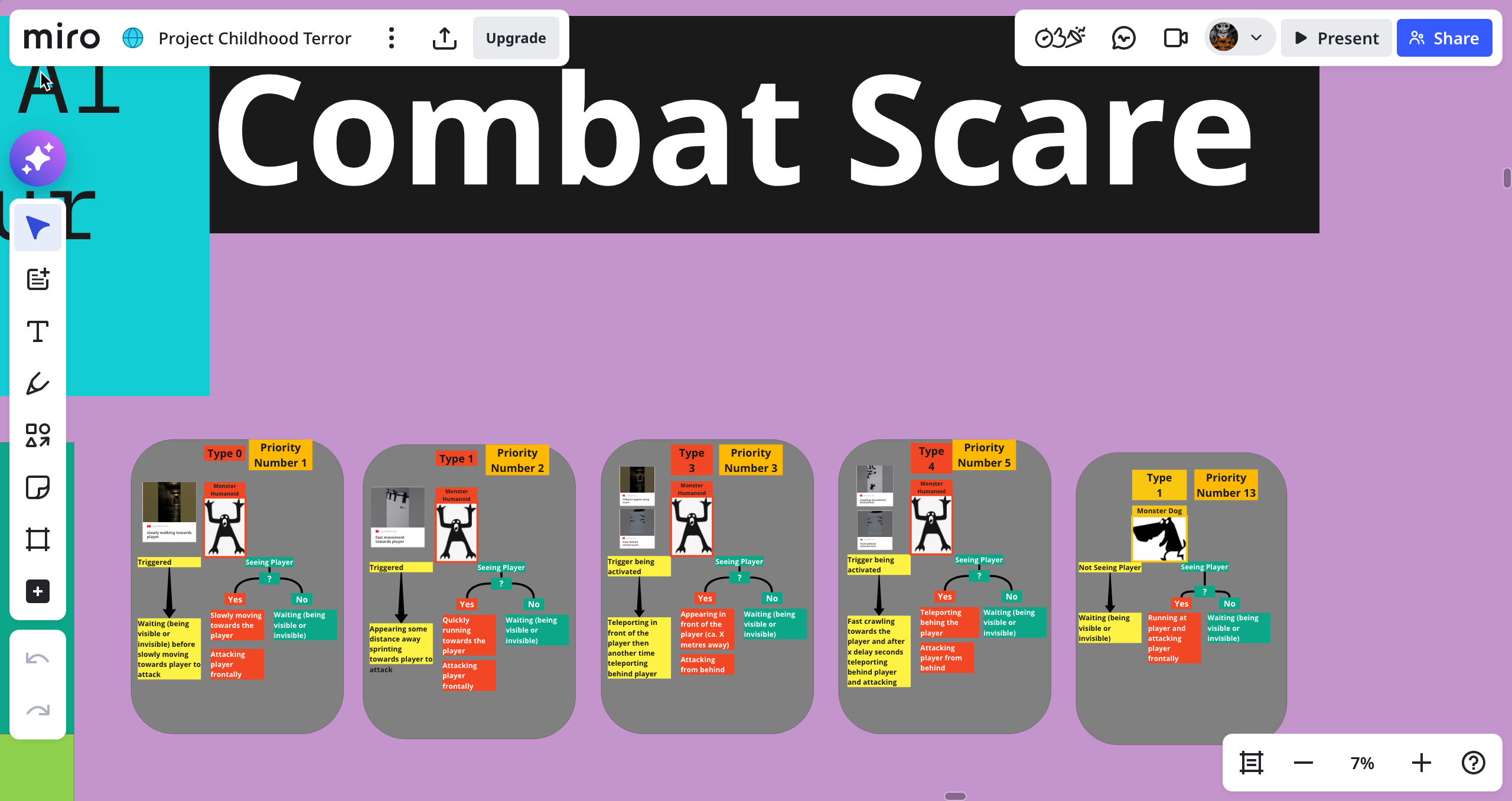
In order to avoid that, the technical designer and I came up with this very neat solution that I am most proud of. We might only have a small cast of differing monsters, but they may be spawned in for one player or run, but not the next.
So seeing the players bravely moving around the corner in anticipation of eradicating a monster, just for it to spawn from behind or not be there at all, was very satisfying.
Q & A
What were the biggest challenges you experienced?
- Bottleneck issues caused by technical issues
- Having technical programming limitations and focusing on what is really smooth, and building the levels accordingly.
What technical tools did you use?
- Miro
- Discord
- Perforce
- Trello
- Unreal Engine 4
What is the most significant thing you learned during development?
- Gameplay is the one central thing that links everything together; the understanding has to go way beyond the mechanical – perhaps nothing will teach that development lesson better than a horror game.
- Brainstorming and researching in order to just dump everything into a Miro board/design document, even if the ideas end up
unused, they will lead to other useful, doable elements or combinations.
If you had more time, what would you improve or add?
- A complete AA production quality with a story, and using key ways of tracking the player to reference/respond to it later. This game concept, realised with an AI element, could be an all-time classic horror game.
- More enemy designs to be implemented, so that triggerboxes can be more smartly linked together.
- Adding more intricate environmental scares, like bugs, moving water, and messages on walls and voicelines.
Hast du Fragen?
Dann kannst uns gerne kontaktieren.